

Solemnity of All Saints
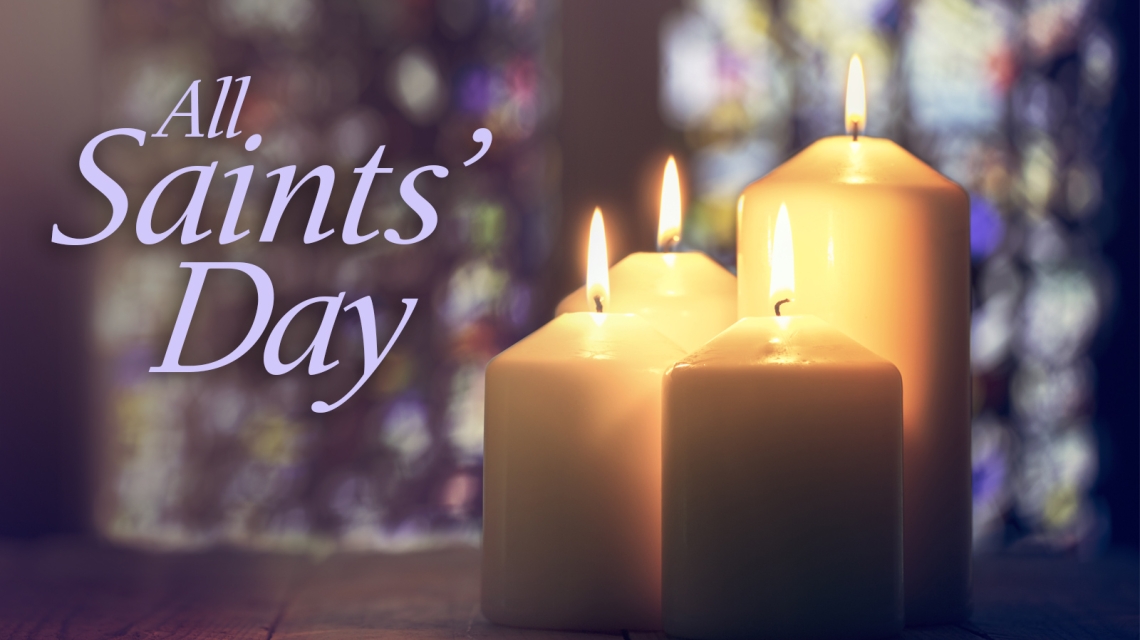
"Saints make a difference, and that difference is that they embody the Spirit, virtues, values, and message of Jesus." - Bishop James Ruggieri
Ob the Solemnity of All Saints, more commonly known as All Saints’ Day, Catholics celebrate the saints, both known and unknown. We honor all those who have been faithful disciples of Christ and who now rejoice in God’s presence.
The saints inspire us and give us a model of Christian living to follow. On All Saints’ Day, we reflect on our own call to holiness and give thanks to God for the graces he has given us and the promise of eternal life that awaits us. While our communion with fellow Christians brings us closer to Christ, our communion with the saints joins us to Christ (CCC 947).
In the early Church, remembrance of the saints focused on martyrs. Early Christians wanted to make sure those who died for their beliefs were not forgotten. From at least the fourth century, the Eastern Church had a festival honoring saints, and in the early seventh century, Pope Boniface IV consecrated the Pantheon of Rome to the Blessed Virgin and all the martyrs.
About 100 years later, Pope Gregory III established the date as November 1 when he consecrated a chapel to all the martyrs in St. Peter’s Basilica and ordered an annual celebration. Originally, the November 1 feast was only celebrated in Rome, but in the eight century, Pope Gregory IV extended it to the entire Church.
All Saints' Day is a holy day of obligation. However, in 2026, the feast is on a Sunday, so parishes will observe their regular weekend schedules.